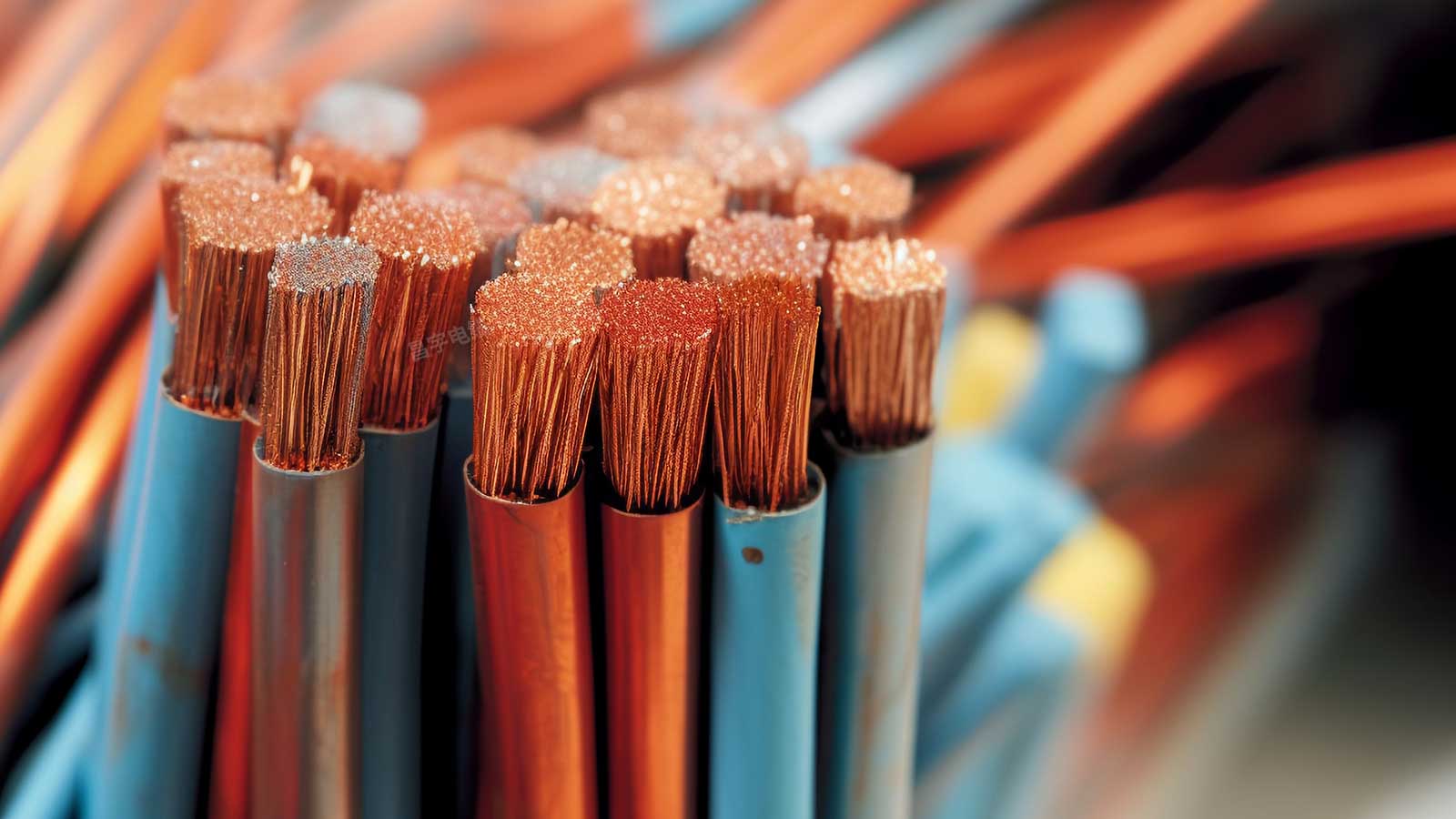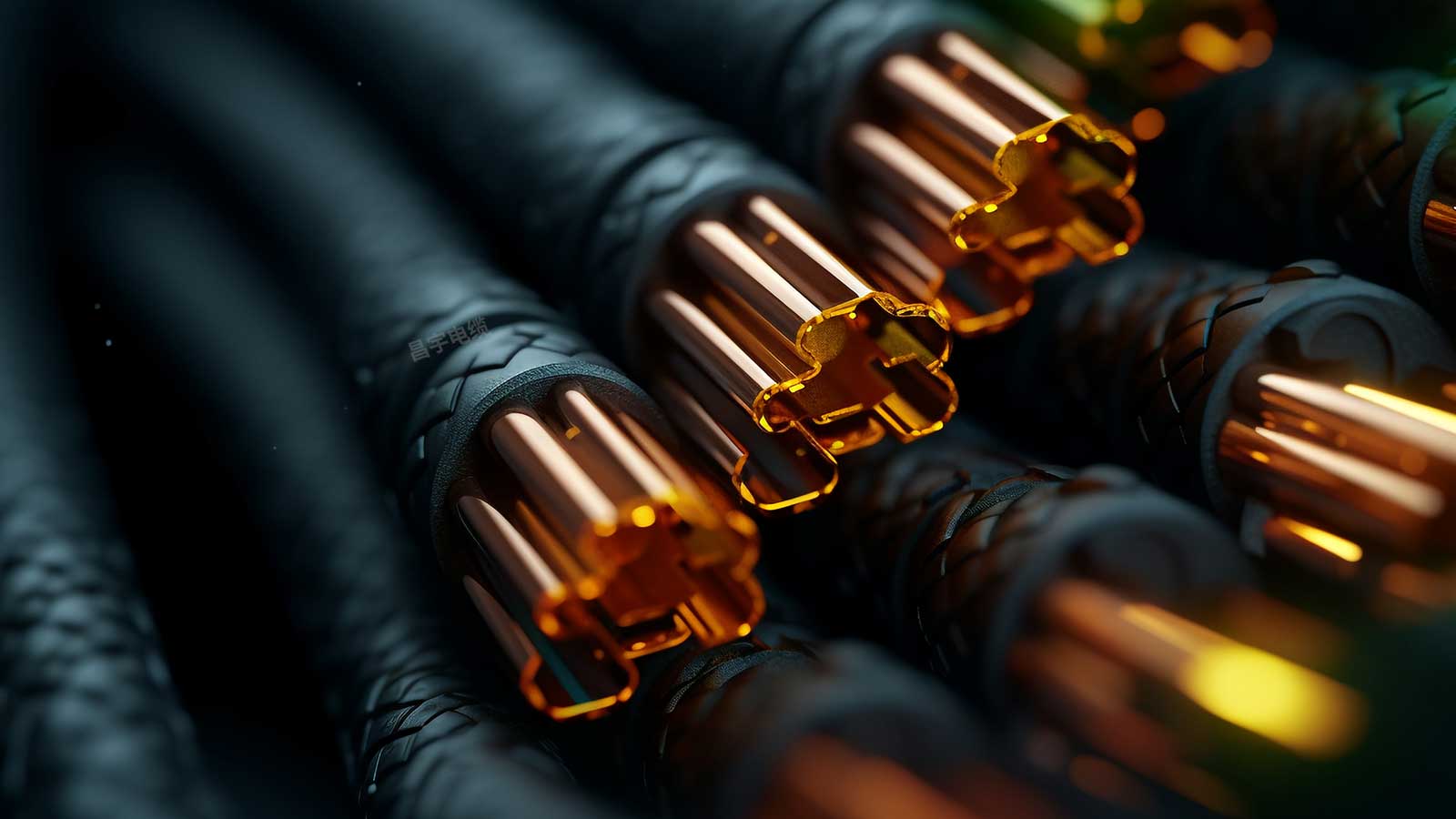
The length of wire and cable is the basic unit of measurement. All wire and cable from the beginning of the conductor processing, in the conductor of the outer layer by layer to add insulation, shielding, cable, sheath, and so made wire and cable products. The more complex the product structure, the more layers are added. Here with the small series to see the wire and cable production process. Wire and cable production process 1. Copper, aluminum single wire drawing, wire and cable commonly used copper, aluminum rod, at room temperature, the use of wire drawing machine through one or several holes in the die drawing, so that its cross-section reduced, length increased, strength increased. Wire drawing is the first working procedure of wire and cable companies. The main technological parameter of wire drawing is die matching technology. 2. When the annealed copper and aluminum monofilament is heated to a certain temperature, it is recrystallized to improve the toughness and reduce the strength of the monofilament. The key of annealing process is to prevent the oxidation of copper wire. 3. The stranded conductor, in order to improve the flexibility of wire and cable, in order to facilitate installation, conductive wire core to take a number of monofilament stranded. From the stranded form of conductive wire core, can be divided into regular stranded and irregular stranded. Irregular strangulation is divided into beam strangulation, concentric compound strangulation, special strangulation and so on. In order to reduce the occupation area of the conductor and the geometrical size of the cable, the common circular shape is changed into semicircle, sector, tile and compressed circular shape. The conductor is mainly used in power cables. Four. Plastic wire and cable are mainly extruded solid insulation layer, the main technical requirements of plastic insulation extrusion: 4.1. Eccentricity: the deviation of the insulation thickness of the extrusion process level is an important indicator, most of the product size and its deviation in the standard are clearly defined. 4.2. Smoothness: the surface of the extruded insulating layer should be smooth, and there should be no bad quality problems such as surface roughness, scorch and impurity. 4.3. Density: the cross-section of the extruded insulating layer should be compact and strong, no pinhole visible to the naked eye is allowed, and no bubble exists. 5. Cable, for multi-core cable in order to ensure molding, reduce the shape of the cable, generally need to be twisted into a circular. The mechanism of stranding is similar to that of conductor stranding. Because of the large diameter of stranding joint, most of them adopt non-untorsion mode. The technical requirements of the cable: first, to prevent abnormal insulation core turn over and lead to cable twisting and bending; second, to prevent the insulation layer was scratched. Most cables are cabled along with the completion of two other processes: one is to fill, to ensure the integrity of the cable after cabling and stability, and one is to bind, to ensure that the core of the cable is not loose. 6. Inner protective layer, in order to protect the insulation core from the armour, it is necessary to protect the insulation layer properly, the inner protective layer is divided into: extruded inner protective layer (isolation sleeve) and wrapped inner protective layer (cushion layer) . The wrapping cushion layer replaces the binding belt and synchronizes with the cabling process. Seven. Armored, laying in the underground cable, work may bear a certain positive pressure, can choose the steel tape armored structure. When laying the cable under both positive pressure and tensile force (such as water, vertical shaft or soil with large drop) , the structure with inner steel wire armour should be selected. 8. The outer sheath is a structural part that protects the insulation layer of the electric wire and cable from the erosion of environmental factors. The main function of the outer sheath is to improve the mechanical strength of wires and cables, chemical corrosion, moisture-proof, waterproof immersion, to prevent cable burning and other capabilities. According to the different requirements of cable, plastic sheath is directly extruded by extruder.